 A Voice Across Generations
Seeing input make a difference
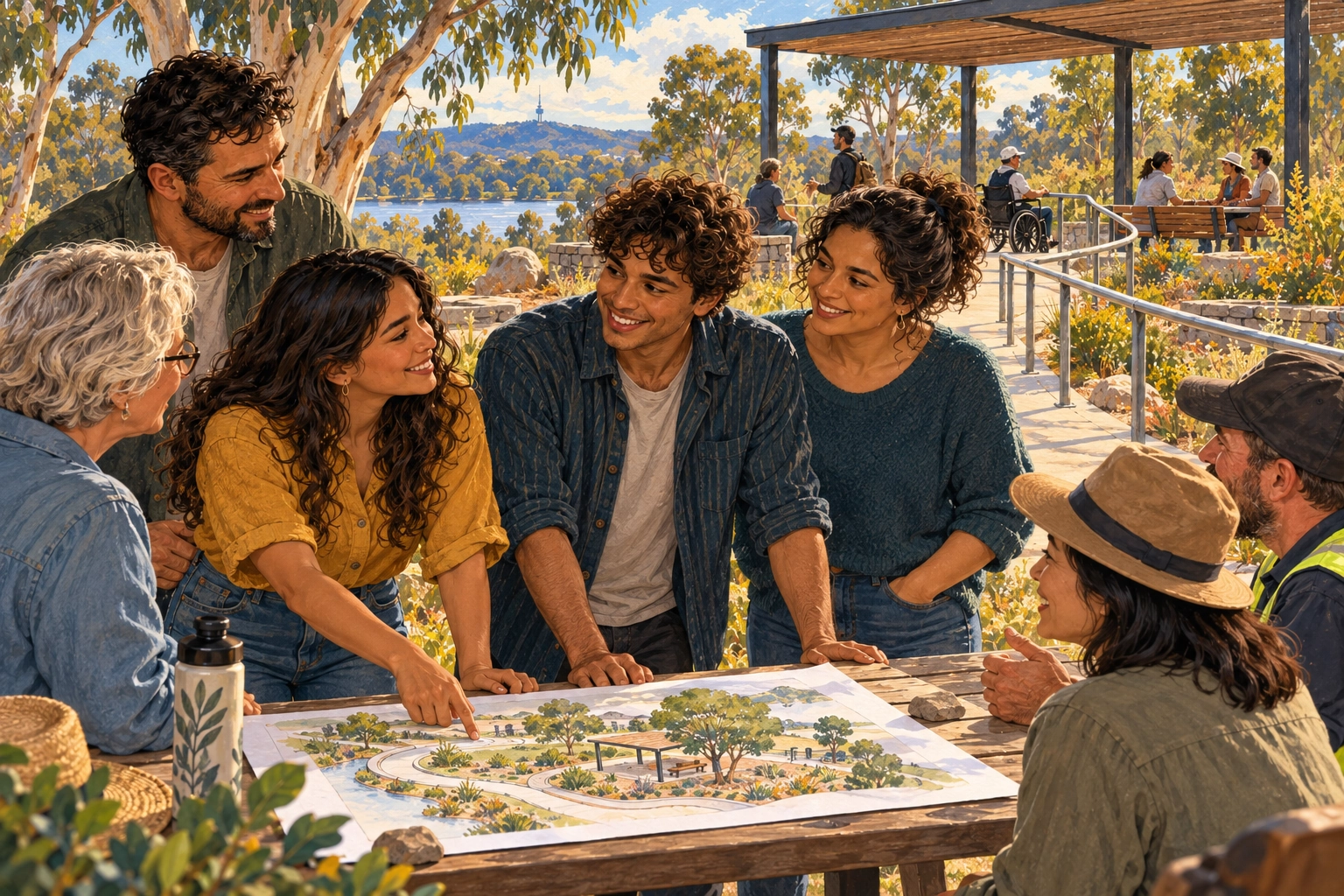
Let us follow the proposal far enough to see what an answer might look like.
In this imagined example, the responsible body agrees to inspect the route. It identifies a surface repair that can be made promptly, a seating proposal needing further assessment and a lighting issue involving another organisation. The group receives named responsibilities and dates for updates.
That is progress. It is not yet the same as a safer, more accessible journey.
Sam wants the project page marked successful when the first response arrives. Mia asks whether anyone has checked the work. They have found another distinction worth teaching: acknowledgement, decision and implementation are different stages.
Their shared record follows each one. It shows the original request, the evidence supplied, the response, the promised action and what can actually be observed. When a date passes without an update, the record says that too. It need not guess at motives to make a delay visible.
After the repair, people try the route again. One obstacle has gone. Another remains. A seat would help some users, but its proposed position would narrow the path for others. The group changes the recommendation.
This is where I want the idea of a living process to become practical. Evidence leads to a decision. Someone implements it. People examine the result. The next decision takes account of what happened.
The same discipline must apply when a proposal fails. Perhaps the authority gives a well-supported reason why a suggested remedy would make matters worse. Perhaps the participation tool produces a crowded argument and no useful answer. We should be able to record either outcome without treating it as a betrayal of the project.
My concern about closed files and finished consultations is that they can close the door on consequences. A recommendation may be accepted while the people affected wait years to discover what acceptance meant. In the process I am proposing, a status label would need supporting information: what was done, by whom, and whether it met the stated aim.
Success here is modest. A route becomes easier to use, the remaining problems have owners, and residents can see the difference between a promise and a result.
We do not need to pretend that this proves a whole political system. It gives us something smaller and more valuable than a slogan: an outcome we can examine, including its limitations.